Registration summary
ConferenceICEOCCE
ModeStandard / Physical
ParticipationListener
Registration fee$155.00
Bank charges (5.8%)$8.99
Total payable$163.99
Includes all bank processing charges — the amount above is exactly what will be charged.
Benefits of Registering as Listener
Access to Conference Sessions
Networking Opportunities
Certificate of Participation
Invitation Letter Support
Conference Kit / Materials
Access to Keynote Sessions
• Conference Session Tracks •
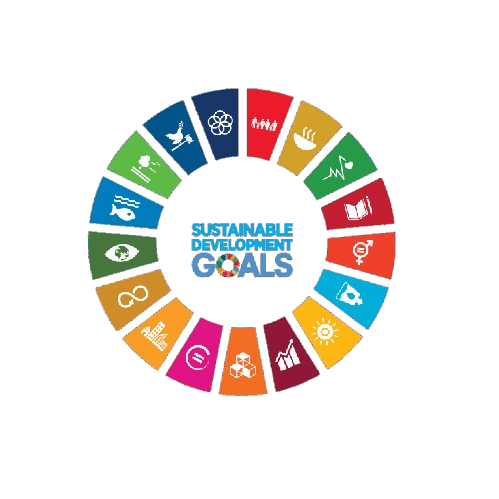
SDG-Aligned Research Themes
ICEOCCE conference tracks support global knowledge exchange, innovation, and sustainable development priorities across diverse disciplines.

01 Advancements in Environmental Organic Chemistry +
This track focuses on the latest research and developments in environmental organic chemistry, emphasizing the interactions between organic compounds and their environmental impact. Contributions may include studies on organic pollutants, their sources, and innovative approaches to mitigate their effects.
02 Chemical Transformations in Environmental Contexts +
This session will explore the chemical transformations of organic compounds in various environmental settings. Topics may include reaction mechanisms, kinetics, and the role of environmental factors in influencing these transformations.
03 Nanoscience Applications in Environmental Chemistry +
This track will highlight the role of nanotechnology in addressing environmental challenges related to organic pollutants. Presentations may cover the synthesis, characterization, and application of nanomaterials for pollutant detection and remediation.
04 Industrial Organic Chemistry and Sustainability +
This session will examine the intersection of industrial organic chemistry and sustainable practices. Discussions will focus on green chemistry principles, waste reduction, and the development of eco-friendly chemical processes.
05 Materials for Environmental Remediation +
This track will delve into the development and application of materials designed for the removal of organic pollutants from various environments. Topics may include sorbents, membranes, and catalytic materials that enhance remediation efficiency.
06 Molecular Interactions and Environmental Chemistry +
This session will investigate the molecular interactions that govern the behavior of organic compounds in environmental systems. Emphasis will be placed on thermodynamics, partitioning behavior, and the implications for pollutant transport.
07 Regulatory Frameworks and Environmental Chemistry +
This track will address the role of environmental regulations in shaping research and practices in organic chemistry. Presentations may include case studies on compliance, policy development, and the impact of regulations on chemical innovation.
08 Biological Transformations of Organic Pollutants +
This session will focus on the biological processes that transform organic pollutants in the environment. Topics may include microbial degradation, enzymatic reactions, and the implications for bioremediation strategies.
09 Thermodynamics of Organic Compound Behavior +
This track will explore the thermodynamic principles that govern the behavior of organic compounds in environmental systems. Discussions will include activity coefficients, solubility, and phase equilibria relevant to pollutant dynamics.
10 Sorption Processes in Environmental Chemistry +
This session will examine the sorption processes involving organic and inorganic surfaces in various environmental contexts. Emphasis will be placed on the mechanisms, factors influencing sorption, and implications for pollutant retention and mobility.
11 Innovative Approaches to Organic Pollutant Removal +
This track will showcase novel techniques and technologies for the removal of organic pollutants from air, water, and soil. Presentations may include advanced oxidation processes, adsorption technologies, and bioremediation strategies.
