Registration summary
ConferenceICHAGHI
ModeStandard / Physical
ParticipationListener
Registration fee$135.00
Bank charges (5.8%)$7.83
Total payable$142.83
Includes all bank processing charges — the amount above is exactly what will be charged.
Benefits of Registering as Listener
Access to Conference Sessions
Networking Opportunities
Certificate of Participation
Invitation Letter Support
Conference Kit / Materials
Access to Keynote Sessions
• Conference Session Tracks •
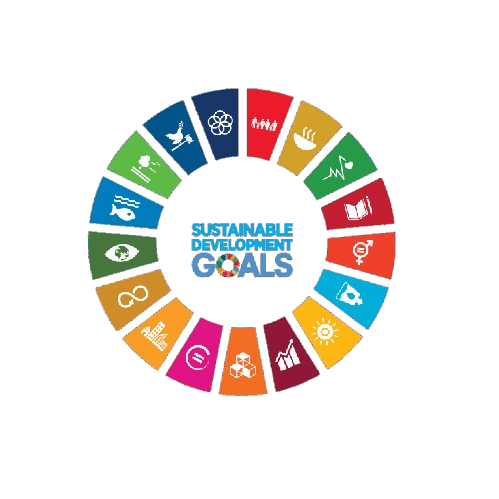
SDG-Aligned Research Themes
ICHAGHI conference tracks support global knowledge exchange, innovation, and sustainable development priorities across diverse disciplines.
01 Globalization and Its Impact on HIV/AIDS Policy +
This track will explore the intersection of globalization and HIV/AIDS policy, examining how global economic and political dynamics shape responses to the epidemic. Participants will discuss the implications of international agreements and trade policies on health outcomes in affected populations.
02 Health Inequality and HIV/AIDS: A Global Perspective +
This session will focus on the disparities in health outcomes related to HIV/AIDS across different regions and populations. It aims to identify the social determinants that contribute to these inequalities and propose strategies for equitable health interventions.
03 Public Health Strategies for HIV Prevention +
This track will address innovative public health strategies aimed at preventing HIV transmission, particularly in marginalized communities. Discussions will include the effectiveness of education, outreach, and community-based interventions in reducing infection rates.
04 Policy Advocacy for HIV/AIDS: Challenges and Opportunities +
This session will examine the role of policy advocacy in shaping effective responses to HIV/AIDS at local, national, and global levels. Participants will share best practices and discuss the barriers faced in advocating for policy reforms that address health inequalities.
05 Socioeconomic Disparities and Health Outcomes in HIV/AIDS +
This track will investigate the relationship between socioeconomic status and health outcomes for individuals living with HIV/AIDS. The focus will be on understanding how poverty, education, and access to healthcare influence disease progression and treatment.
06 Global Health Governance and HIV/AIDS Responses +
This session will delve into the governance structures that influence global health responses to HIV/AIDS. Participants will analyze the effectiveness of international organizations and partnerships in addressing the epidemic and promoting health equity.
07 Human Development and HIV/AIDS: A Holistic Approach +
This track will explore the connections between human development indicators and the HIV/AIDS epidemic. Discussions will focus on how improving education, economic opportunities, and social services can contribute to better health outcomes.
08 Equity in Health Systems: Addressing HIV/AIDS +
This session will focus on the need for equity in health systems to effectively address the HIV/AIDS epidemic. Participants will discuss strategies for ensuring that marginalized populations have access to necessary healthcare services.
09 The Role of Globalization in Shaping Health Policies +
This track will examine how globalization influences health policy formulation and implementation in various countries. Participants will discuss the implications of transnational health initiatives and their impact on local health systems.
10 Social Justice and HIV/AIDS: Ethical Considerations +
This session will address the ethical dimensions of HIV/AIDS responses, focusing on social justice and human rights. Discussions will highlight the importance of inclusive policies that respect the dignity and rights of affected individuals.
11 Innovative Approaches to Disease Prevention in HIV/AIDS +
This track will showcase innovative approaches to disease prevention in the context of HIV/AIDS, including technological advancements and community-led initiatives. Participants will explore how these approaches can be scaled and integrated into existing health systems.
